

Are Your Spectacles Triggering Your Acne?
If you regularly wear specs or sunglasses, the breakouts on your nose may not be a coincidence

Key Takeaways
Your spectacle frames can trigger a type of breakout called acne mechanica.
These breakouts are caused by a combination of pressure, friction, trapped heat, and acne-causing bacteria.
They usually occur along the nose bridge and areas where the spectacle frame and nose pads rest for long periods of time.
You need to adhere to a habit stack and a topical stack consistently to tackle acne mechanica.
The content in this newsletter is based on dermatological science and should not be substituted for prescriptive advice. If you have any questions, comments / drop us a DM - Neothera’s Medical Panel will get back to you ASAP.
We’ve seen multiple cases in Neothera’s 8-Week Acne Care System of people doing everything right, but still breaking out on or around the nose. They keep wondering why the acne in that area persists, even while the acne elsewhere subsides. The answer is rather anticlimactic...
Some acne triggers are unassuming, they hide in plain sight. They’re boring, so they’re easy to miss - like a dirty pillowcase, a sweaty helmet, or… like in this case, your spectacles.
Assuming your vision isn’t the best, your spectacles sit on your face for at least 14 hours a day. Fewer, if you forget to wear your specs as I do, or are more of a sunglasses wearer on sunny days.
Meet Acne Mechanica
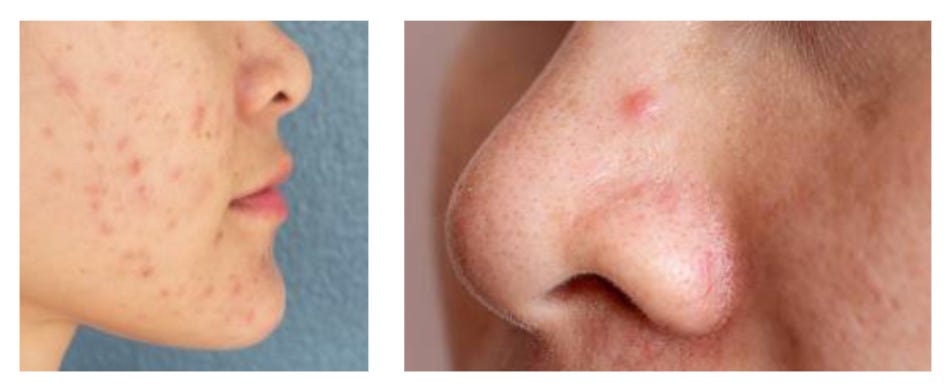
The fancy name for this kind of breakout (i.e. what a doctor or medical textbook would call it) is acne mechanica. Dermatologists define it as a lesion in an area of friction, pressure, rubbing or occlusion. It can happen to anyone, whether or not they already have acne. If “maskne” rings a bell, that was the same thing with a mask instead of specs. We’ve seen similar cases with helmets or tight clothing.
How Is Acne Mechanica Caused?
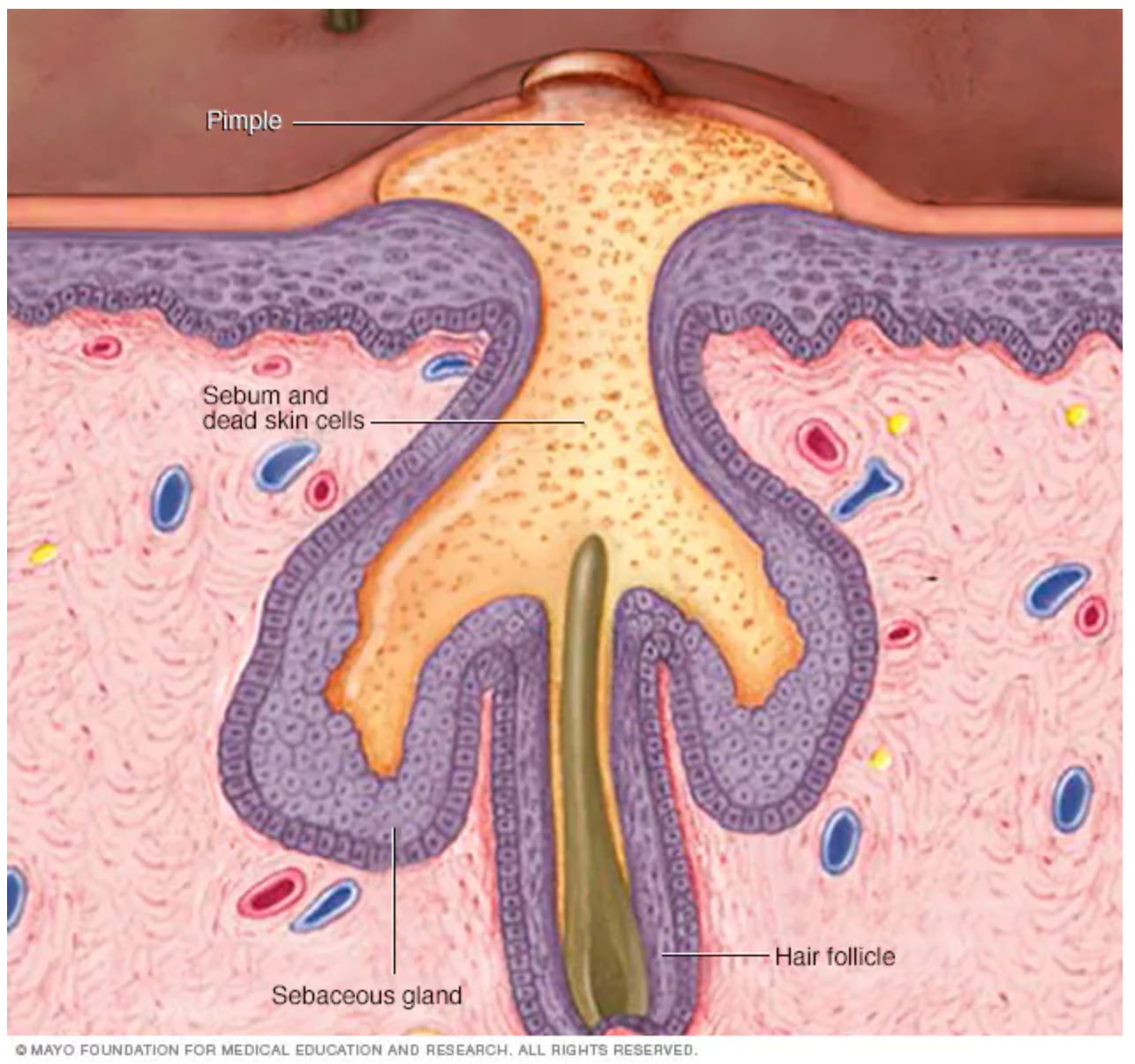
Acne mechanica is triggered by a combination of factors:
Pressure: The nose pads and arms of any spectacle frame rest on one small patch of skin. The hair follicles here, under sustained pressure, don’t shed dead cells normally, causing build up and clogging the pore.
Friction: Every time you push your glasses up, or they slide down, the frame drags across skin. This repeated friction inflames the follicle wall.
Occlusion and heat: Sweat and sebum collect where the frame sits (since they have nowhere to go!), making your pores more prone to clogging.
Bacteria and debris: The spectacle frame is a hub for acne-causing bacteria, dirt and grime.
So, when the frame rests in contact with your skin, it creates the perfect environment for acne breakouts.
How To Tell If Your Spectacles Are The Culprit
There’s a pattern to how these breakouts appear, and this checklist will help you figure out if it’s indeed triggered by your spectacles:
Acne location: Breakouts sit on the nose bridge, the sides of the nose, temples, or just in front of the ears, and they map onto your frame.
Morphology: They are usually the same size and look like small red bumps, unlike cystic acne.
Timing: They settle down on days you wear contacts and avoid spectacle frames. Or when you consistently clean your spectacles daily.
Recurrence: The same two or three lesions (acne breakouts) keep returning to the same place.
How To Fix Or Prevent Spectacle-Triggered Acne
Like we do for our 8-week acne care system, we have broken this down into the habit stack (which manages the root cause) and the topical stack (which manages the skin’s surface and bacteria).
The Habit Stack (For The Root Cause):
Clean the contact points daily, not just the lenses: Wiping your lenses on your shirt only pushes the dirt around. Use a clean microfibre cloth, or a lens wipe, and pay attention to the nose pads and arms rather than just the glass.
Use 70% IPA on the frame, not the lens: Alcohol degrades the anti-reflective coatings, so keep it to just the metal arms, hinges and nose pads. Use mild soap and water, or an alcohol-free cleaning solution on the lenses.
Replace old silicone nose pads: They yellow, harden and go rough over time, which raises friction.
Get the fit adjusted: A frame that keeps sliding down gets pushed back up twenty times a day, and every push is friction. Most opticians will do this for free.
Retire rusty or pitted metal frames: Corroded metal is rougher, holds more bacteria, and is more likely to irritate your skin. (If you are attached to that frame, this might not be the news you wanted).
The Topical Stack (For The Surface And Bacteria):
A Salicylic Acid Cleanser: A 2% Salicylic Acid cleanser at least once a day is essential to help dissolve sebum in clogged pores and clear dead skin cells. Try and pick one that doesn’t have fragrance or harsh surfactants to protect your barrier.
Do not scrub the area: It is being mechanically exfoliated all day already because of the friction so scrubbing with force will do more harm than good.
A Barrier-Repairing Moisturizer: A barrier-supporting, non-comedogenic, fragrance-free moisturizer is your friend. Look for skin-supporting ingredients like Ceramides, Panthenol, and Squalane. A compromised barrier under constant friction is the last thing you need.
Do not stack actives on the contact points: Avoid stacking multiple chemical exfoliants like AHAs / BHAs, and Retinoids together. Remember, less is more.
You can use a Benzoyl Peroxide spot corrector on active acne, but you don’t have to overdo it with other actives - it will simply add to irritation.
Are you suffering from recurring breakouts but don’t know what’s causing it? Or are you sick of your acne coming back each time? Take our root cause test developed by dermatologists, nutritionists, R&D experts and gynaecologists to find the root cause.